
Our shared vision
There are many inspiring people and organisations already working to create a better food system in Hertfordshire. A shared vision could help to connect these efforts, amplify their impact, and create opportunities for everyone to contribute.
Together with residents, food producers, community organisations, food businesses, charities, academics and council officers, we created a 2040 vision of a healthy, fair and resilient local food system.
It’s a joyful and delicious future, where we recognise and celebrate the importance of food – as well as the people and ecosystems that produce it. It offers a north star to aim for, and an invitation for each of us to play our part.
Please share it, use it in your work, and reach out if you would like to work with us to make it a reality.
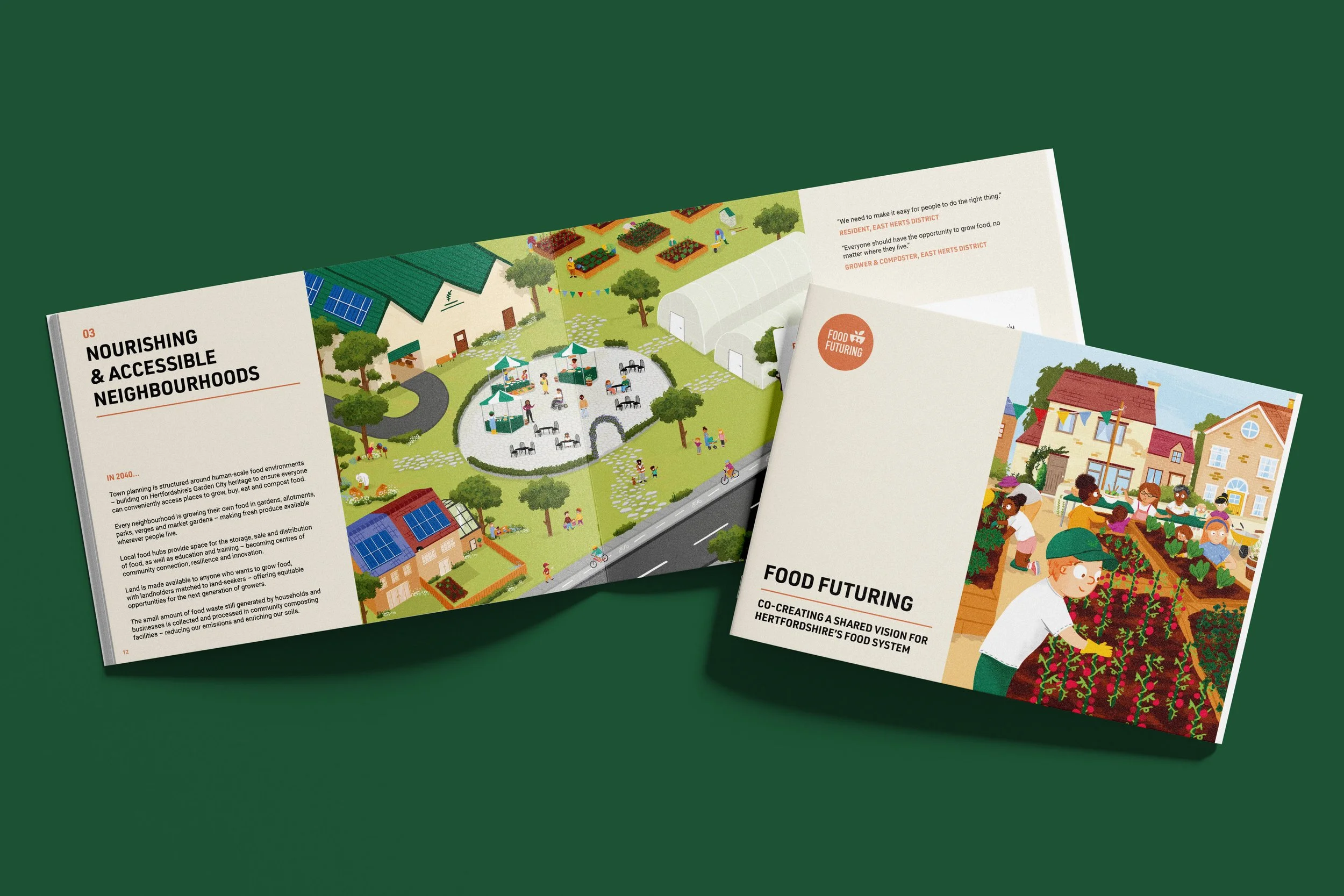
Illustrations by Leanne Coelho.
01
Healthy
& Engaged
People
In 2040…
We are connected with where our food comes from and in tune with the seasons, fostering a culture that values food and recognises its dependence on healthy nature.
Our diets are nutritious and plant-rich, with much fewer chemicals and ultra processed ingredients – improving our health, energy levels and life expectancy.
Good food is accessible and affordable for all, with compassionate support services that make sure no one goes hungry or lacks the essentials for a healthy life.
Education in growing, cooking and nutrition is embedded in schools and available to all ages – building a deeper understanding of food systems and essential skills for food security.
Food, nutrition and green prescribing are central to Hertfordshire’s preventative healthcare approach – improving physical and mental wellbeing while reducing pressures on the NHS.
Postcard from the Future
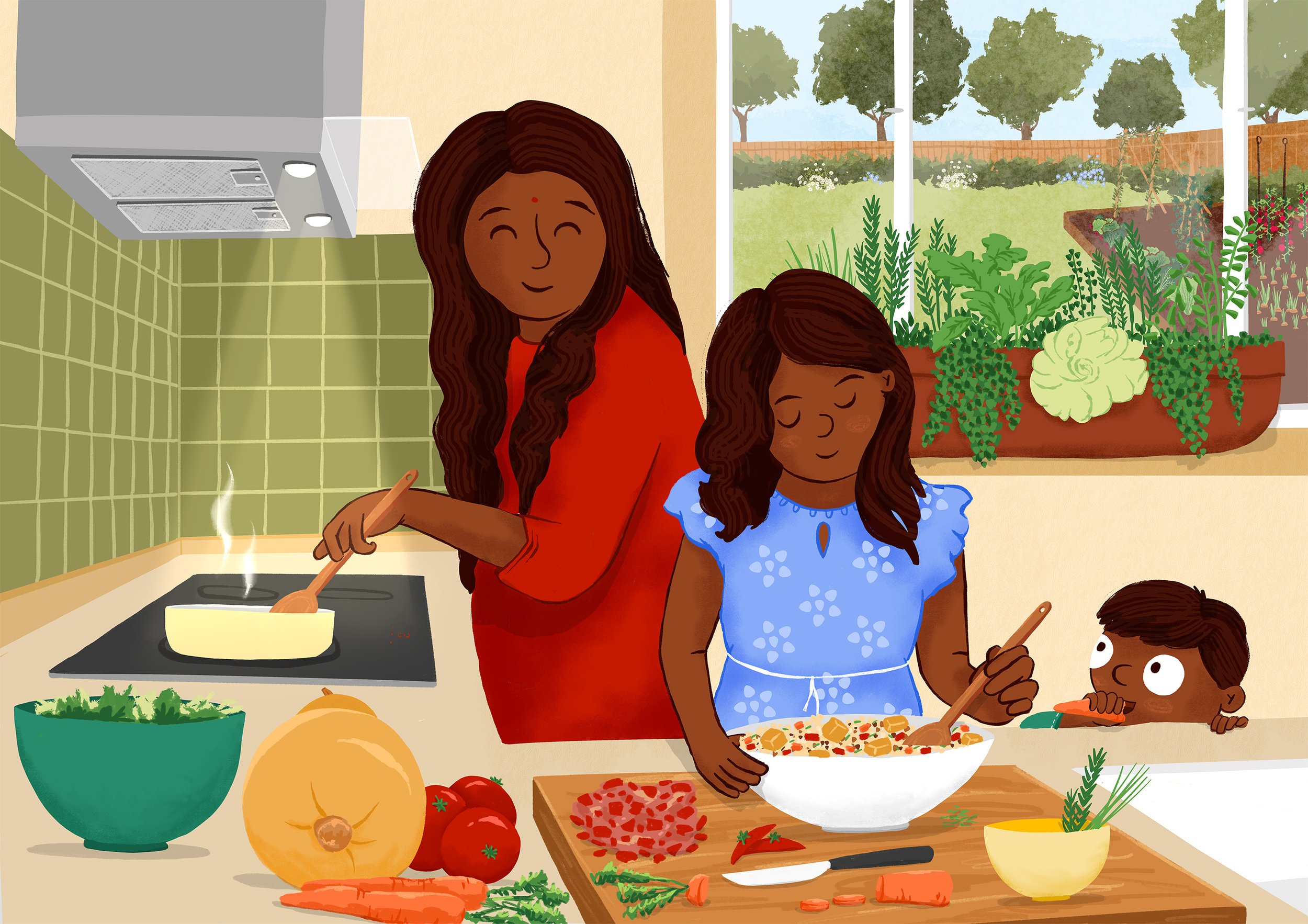
“Priya cooked dinner for the whole family today - a squash and lentil dish she learned at school. She’s only 10, and already understands more about seasonal food and gut health than I ever have. Her little brother was excited to help stir the pot, and I’ve never seen him eat vegetables so willingly!
We’re mostly plant-based now, like a lot of families in Hertfordshire. We get really great nutritional advice through the school to make sure our children are growing up healthy.
I was a bit daunted by the change at first, but the community supermarket has been a lifesaver. We can get fresh, local produce at affordable prices - or even for free at the local pantry if we need it.
It feels good to know we’re eating healthy food without nasty chemicals, while supporting our local farmers and reducing our environmental impact, too.”
02
Connected
& Thriving
Communities
In 2040…
People of all ages are involved in food production, whether at home or through Community Supported Agriculture – giving a shared sense of purpose and developing the knowledge and skills for local food resilience.
We regularly cook, eat and celebrate food together in homes, streets and shared spaces – restoring community cohesion, reducing isolation and feeding more people with less waste.
Food growing, processing and cooking provide meaningful employment, with support for new entrants and attractive wages – reducing unemployment and strengthening the local economy.
We have strong personal connections with our local food producers through markets and farm visits – building trust and support between our communities and the people who feed us.
Cherished food traditions and celebrations have been revived, and new ones created – deepening our respect for eating seasonally and enriching our local food culture.
Postcard from the Future
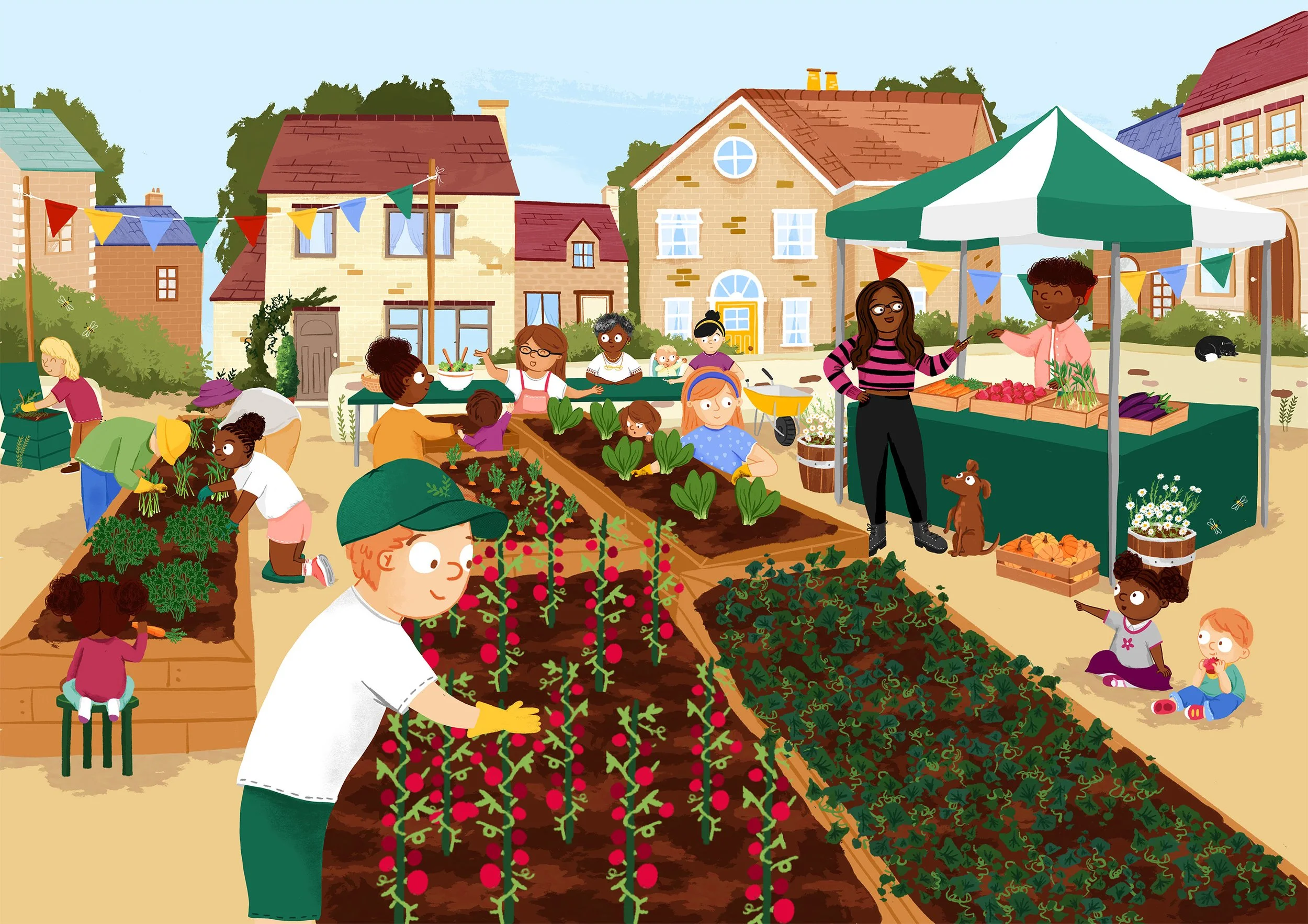
“I’ve just completed my Head Grower training, which means I’ll soon be managing the market garden at the end of our street!
I started working there after leaving school. I was struggling to find a job because a lot of the old career options have disappeared. Now I get paid a decent salary to grow food for my community. I love working outdoors on something that feels meaningful. I can see why more and more young people are choosing to go into growing!
The garden is a real social hub. There are always volunteers and school groups helping out, and we host regular meals for the whole neighbourhood. Last week we celebrated the Autumn Harvest by eating together, singing and dancing, sharing produce and swapping seeds.
Food has really brought this community together through ups and downs over the last few years.”
03
Nourishing
& Accessible
Neighbourhoods
In 2040…
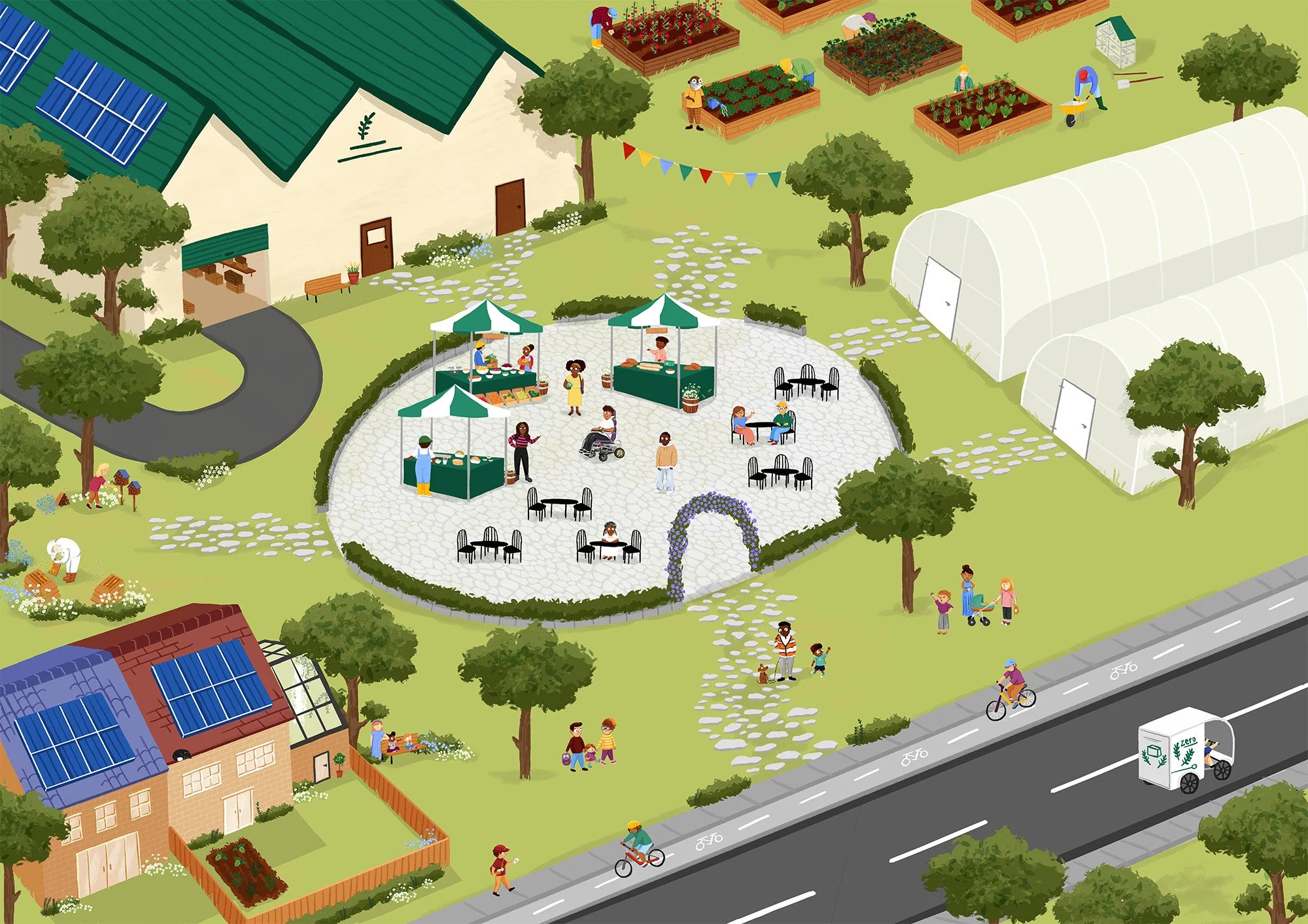
Town planning is structured around human-scale food environments – building on Hertfordshire’s Garden City heritage to ensure everyone can conveniently access places to grow, buy, eat and compost food.
Every neighbourhood is growing their own food in gardens, allotments, parks, verges and market gardens – making fresh produce available wherever people live.
Local food hubs provide space for the storage, sale and distribution of food, as well as education and training – becoming centres of community connection, resilience and innovation.
Land is made available to anyone who wants to grow food, with landholders matched to land-seekers – offering equitable opportunities for the next generation of growers.
The small amount of food waste still generated by households and businesses is collected and processed in community composting facilities – reducing our emissions and enriching our soils.
Postcard from the Future
“I’m about to head out for my weekly visit to the food hub. It’s only a 10 minute walk from my house, and I can get the most wonderful food straight from local farmers and Hertfordshire brands.
I occasionally use their delivery service when I’m not up to the walk, but I feel fitter in my seventies than I did in my thirties. My little compost round has helped with that - wheeling my neighbours’ food scraps to the hub is great exercise!
One of my stops is a young couple who moved in across the road last spring. They told me they’d chosen this street because they couldn’t imagine raising their children without a community garden nearby. It gives me hope that the future is in safe hands.
I’m having dinner with them tomorrow, and I’ve promised to bring some crumble for dessert. I’ll do a bit of foraging for apples, rhubarb, blackberries and hazelnuts in the park on the way home!”
04
Sustainable
& Innovative
Farming
In 2040…
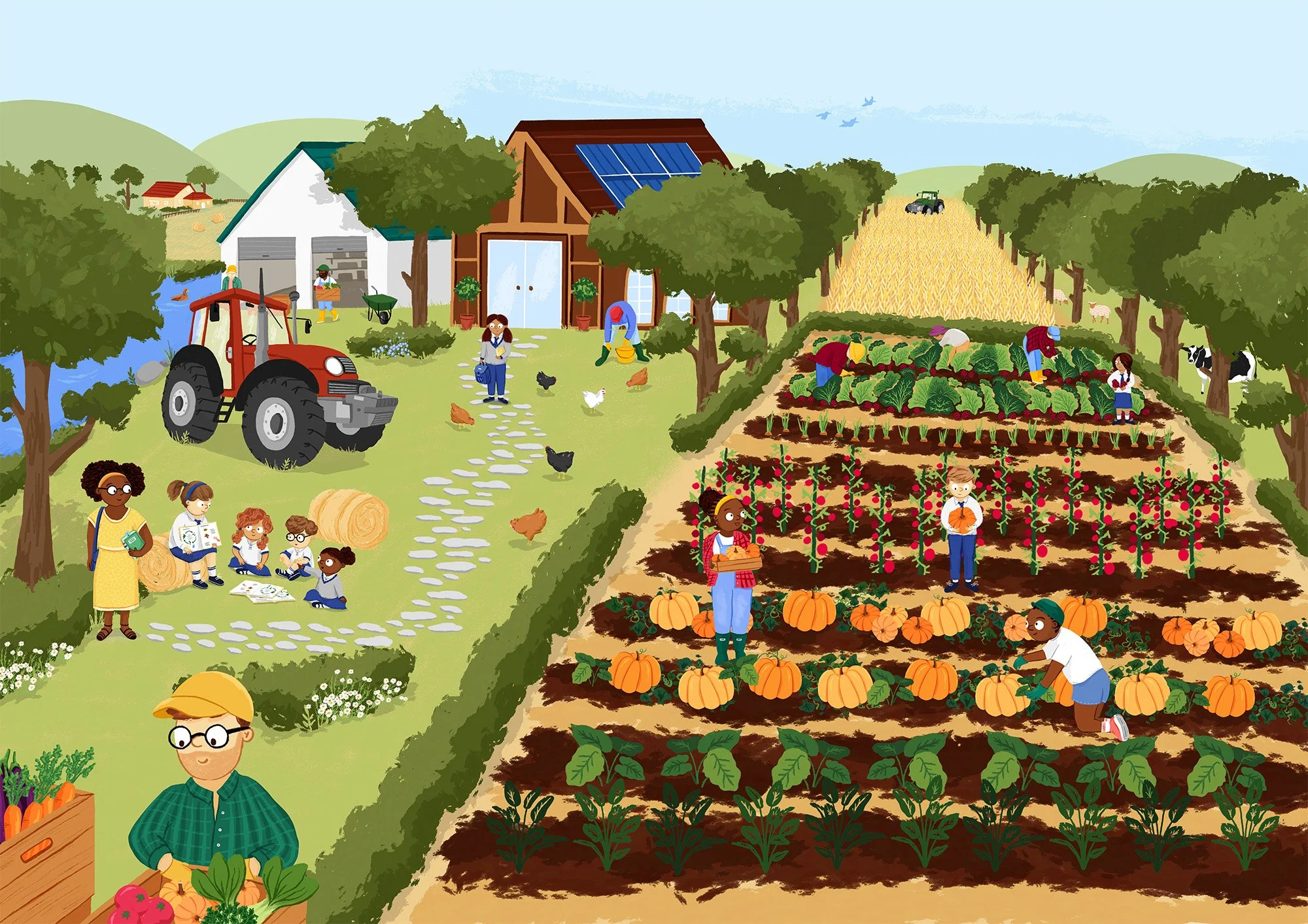
Farmers proudly steward our soil, water, habitats and biodiversity through organic and regenerative practices – improving yields by working with nature and reducing our dependence on chemical fertilisers and pesticides.
Farmers receive the training, tools and funding they need to transition to sustainable practices – reducing the risk of change for independent farms and encouraging collaborative, farmer-led innovation.
Reliable demand for locally produced food empowers farmers to grow what their communities need rather than being overly reliant on global commodity markets.
Farmers are adapting to climate change through more resilient and diverse crop varieties, soil improvement and water management – protecting Hertfordshire’s food supply against increasingly frequent droughts, floods and extreme temperatures.
Farmers prioritise vegetables, fruits and plant-based proteins to support healthy, sustainable diets. Farms that integrate animals meet the highest welfare standards and contribute to ecosystem restoration through natural fertilisation and holistic grazing.
Postcard from the Future
“If we were still farming the way we used to in the 2020s, we’d have lost our crops to flooding and our animals to drought this year. We would have had no choice but to give up the farm.
Thankfully, we made changes while there was still time. Cover crops and minimum tillage help our soil hold water, so the land copes with the heavy rains and the river keeps flowing through the intense summers. Our sheep and cattle graze in the shade of the fruit and nut trees we planted, and their natural fertilisers have helped to keep our crop yields high while cutting our input costs significantly.
The business is more resilient too. A five-year contract with a school caterer allowed us to employ more horticulture staff, and we even get paid to have the children come and learn on the farm.
Change wasn’t easy, but it’s paid off - and I’m proud to see Hertfordshire’s farmers leading the way.”
05
Local &
Resilient
Supply Chains
In 2040…
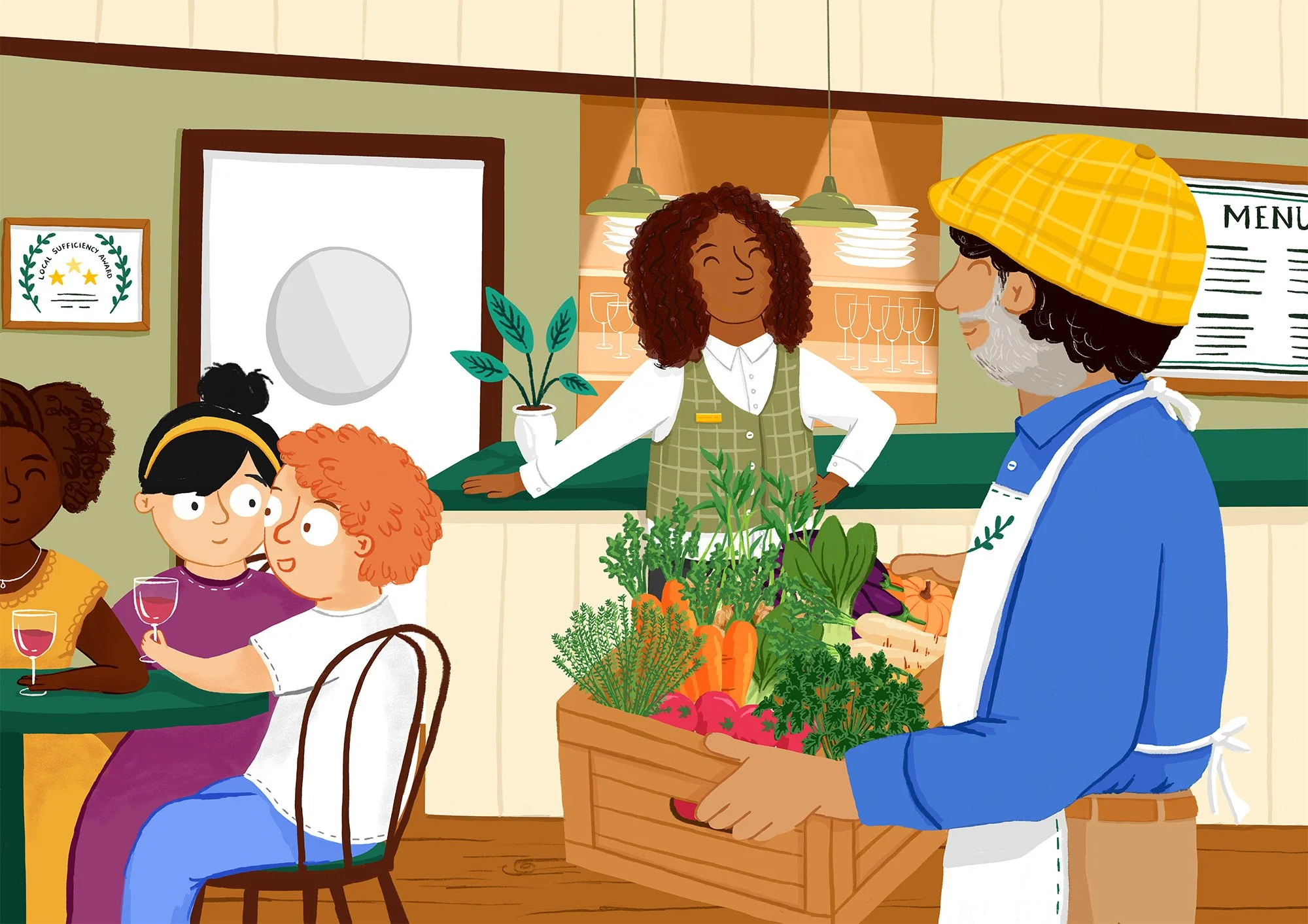
Much of Hertfordshire’s food needs are met by local producers and independent shops, markets, restaurants, cafes and pubs – reducing our reliance on imported food that has travelled long distances.
Supermarkets stock locally produced food – offering convenience and affordability while contributing to the local economy by paying producers fairly.
Schools, hospitals and other public procurement prioritise local, seasonal and sustainably grown produce – providing healthy meals where they are most needed and creating reliable market demand for local producers and processors.
Food processing facilities like mills, creameries, abattoirs, and packaging plants have been re-established across the county – providing the infrastructure for local produce to feed local people.
Shorter supply chains and strong relationships between local businesses drive a thriving food economy – providing employment opportunities and keeping money flowing within the region.
Postcard from the Future
“Our restaurant has won the Local Sufficiency Award for the third year in a row, meaning more than 80% of our ingredients come from within Hertfordshire!
Our menu revolves around what the county produces throughout the year. Bread and pasta is made in-house, using wheat grown and milled near Hitchin. Milk and cheese from the new creamery at Kings Langley. Wine from a vineyard a few miles away. Seasonal vegetables and eggs from the Welwyn Growers’ Co-op, who also take our food waste for composting at their market gardens. We even cook with surplus food from the local supermarket so it doesn’t go to waste.
This would have been impossible without years of investment in local food infrastructure and relationships. In fact, I couldn’t have told you where half our ingredients came from back then. Now I know every supplier personally, and our businesses are thriving together.”
06
Inclusive
& Impactful
Collaboration
In 2040…
Decisions about food, land and nature include the voices of producers, communities and nature itself – building towards a long-term vision that works for everyone and leaves no one behind.
County-level partnerships and local networks support collaboration and knowledge sharing – enabling a joined-up approach that recognises food, health, nature, climate, community and local economy as deeply interconnected.
Collaborations between independent producers, processors and food outlets increase resource sharing and collective access to local markets through co-operatives and other models.
Food redistribution networks rescue surplus food and deliver it to community hubs – preventing waste and getting usable food to where it is needed most.
Hertfordshire is helping other regions to transition their own food systems and shaping national policy – sharing our success stories and creating impact that reaches far beyond the county.
Postcard from the Future
“I’ve just got back from our Autumn Gathering - over 400 people coming together for three days to reflect on our food partnership’s progress and agree on our priorities for the Winter season.
I shared learnings from East Hertfordshire Council’s new processing facility that turns rescued food into nutritious, long-life products. Watford Food Co-op reported on their school-farm twinning pilot, giving every child the chance to learn about growing food. We heard from the Mimram Farmer Cluster, who are pooling resources to invest in equipment, sell to customers and even buy out their tenant farm land collectively.
These are just a few examples of collaborations happening all over Hertfordshire. The partnership has broken down old silos - empowering people to get involved, make decisions and find solutions together.”